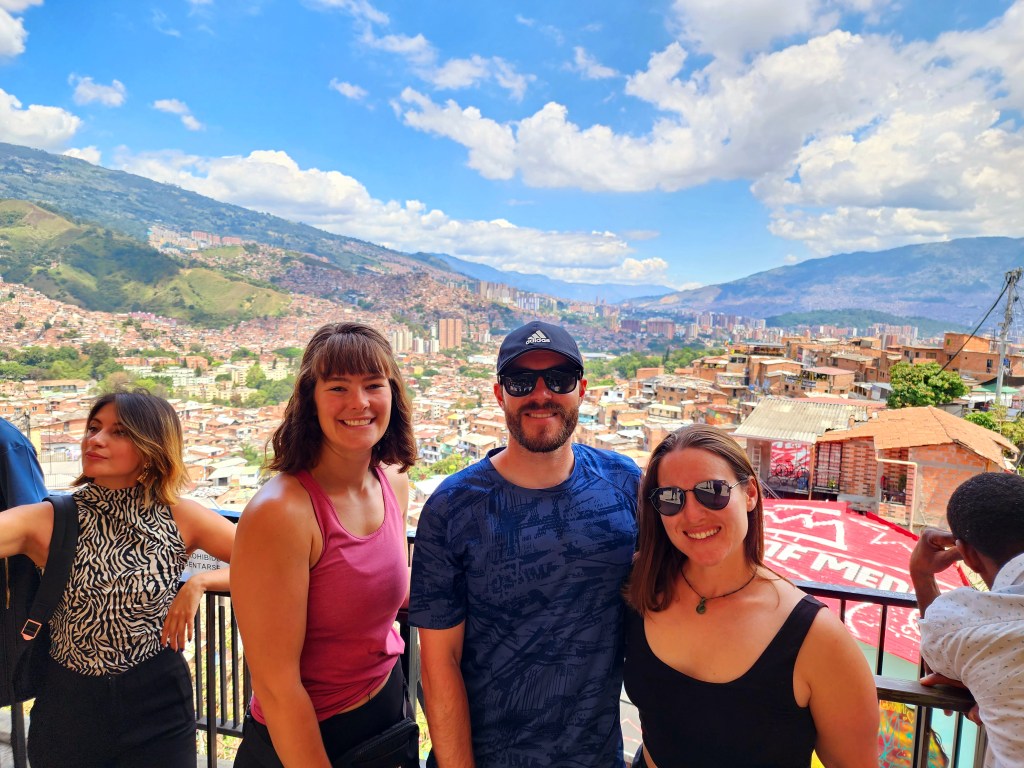
Today, our main objective is to take a walking tour of Comuna 13 in the western part of Medellín. This community was the most dangerous place in the city 20 years ago and arguably the most dangerous community in the world. Contrary to popular belief, this was not in any way related to Pablo Escobar, as the violence in Comuna 13 surged after Escobar’s death. The community sits in a strategic location geographically within the city of Medllín; the main road that connects the city to the coast lies just behind the mountains of Comuna 13. Any goods that were being trafficked in or out of the city passed through that road, and anyone in control of Comuna 13 had control of the highway and the goods being trafficked.
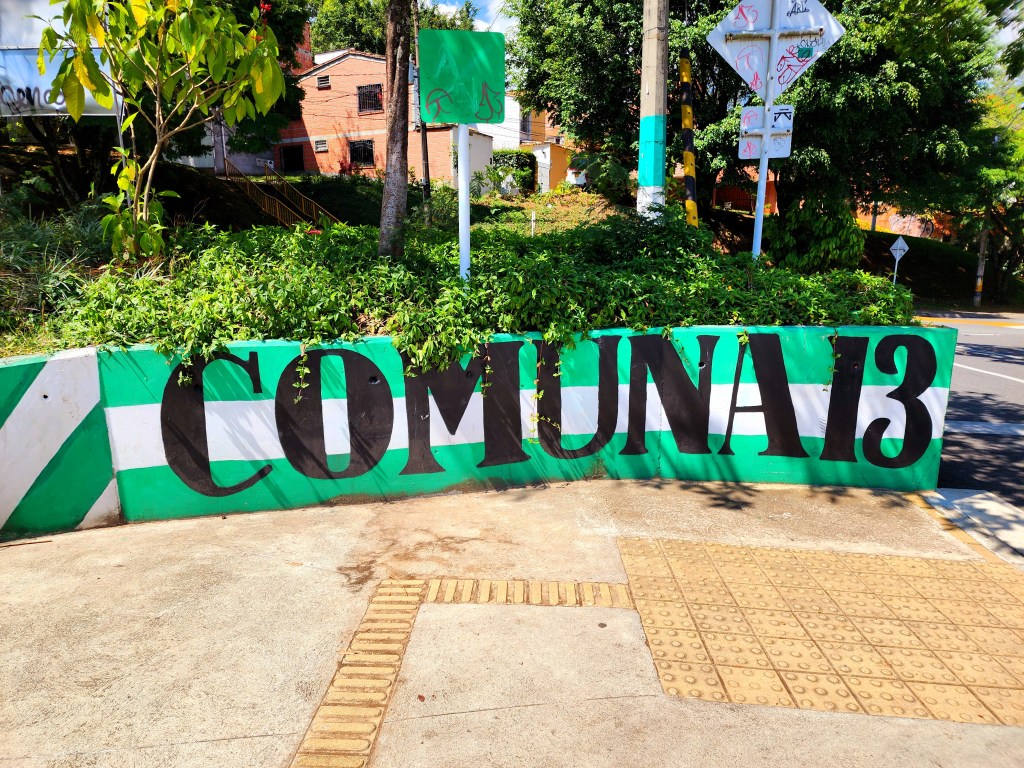
There were several guerillas and paramilitary groups that were fighting for that control, and these conflicts led to the surging violence in this community. However, in 2002, the government stepped in and decided to invest and try to improve the area. They did so in a controversial way, at best, but ultimately succeeded in the “clean-up” of Comuna 13. They brought in the government military to take out the biggest players of the guerillas and paramilitary groups, and the last operation lasted 3 days and included 2 helicopters shooting down into the community, apparently aiming at the main targets, but how could they possibly be so precise, many wonder. A tank was also brought in, and local residents put mattresses up on their windows to slow down or prevent stray bullets from getting inside their homes. Our tour guide, Cristian, grew up in the community and remembers gathering in the kitchen, and looking out of their window and seeing all the mattresses in the neighboring homes.
After this operation, the government began heavily investing in the community. One of the first projects was to build a cable car metro station. As far as I’m aware, Medellín is one of the only cities to use cable cars as a part of the city transit system. The majority of the city is located in a valley surrounded by very tall and steep mountains. The city has sprawled up these slopes, and as we experienced with our poor Uber driver, Lorena, it’s nearly impossible to access the tops of these communities by car. The cable cars help make the main city more accessible for the communities.
Another large project was to build outdoor escalators in another area of the community, again increasing accessibility for the residents to the main city. And these escalators have made that area of Comuna 13 a major tourist attraction in Medellín. For me personally, it was a must see, and if you ever make it to Medellín, that’s a non-negotiable place to visit. I loved it so much, and I think it was easily my favorite part of Colombia so far.
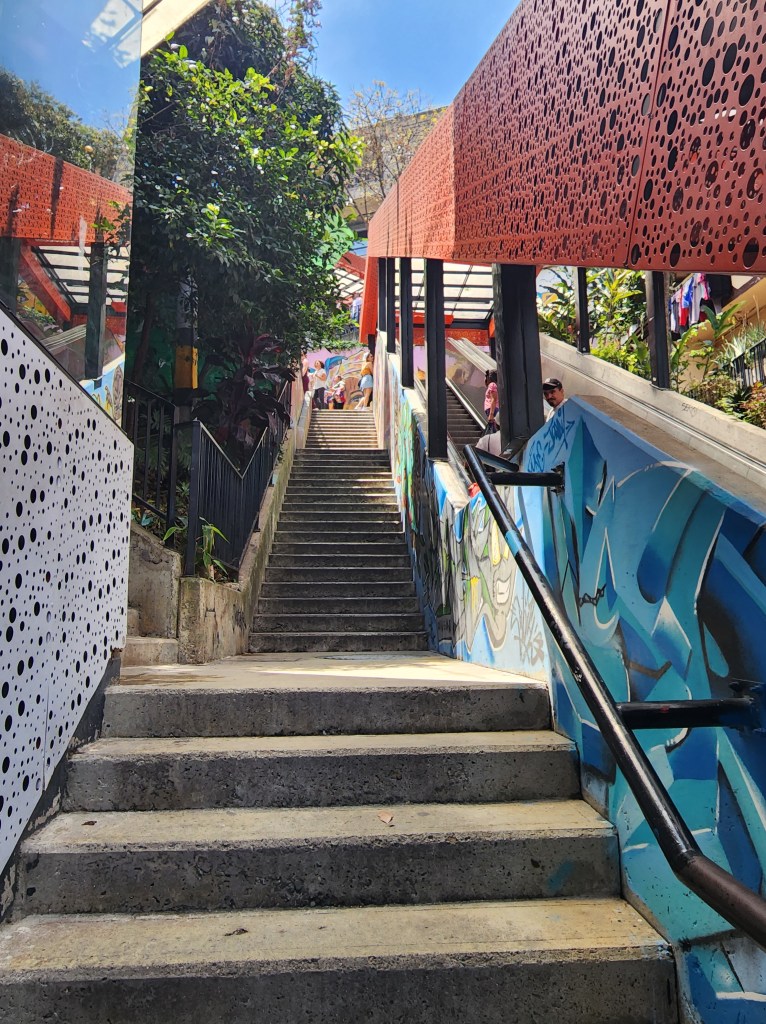
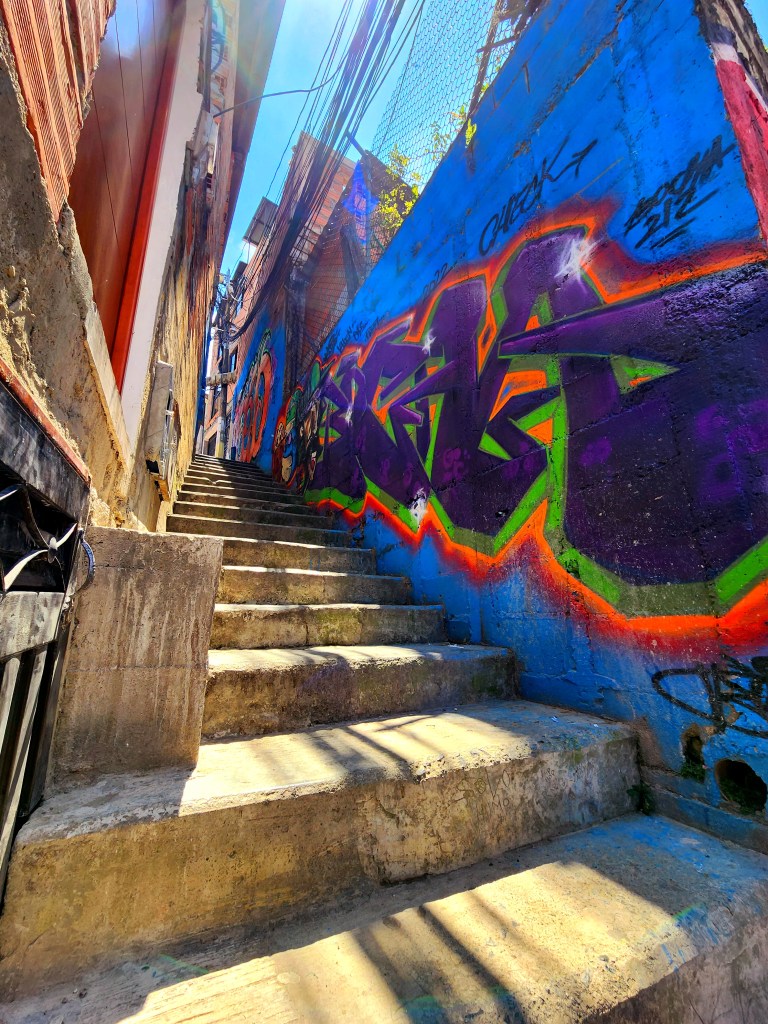
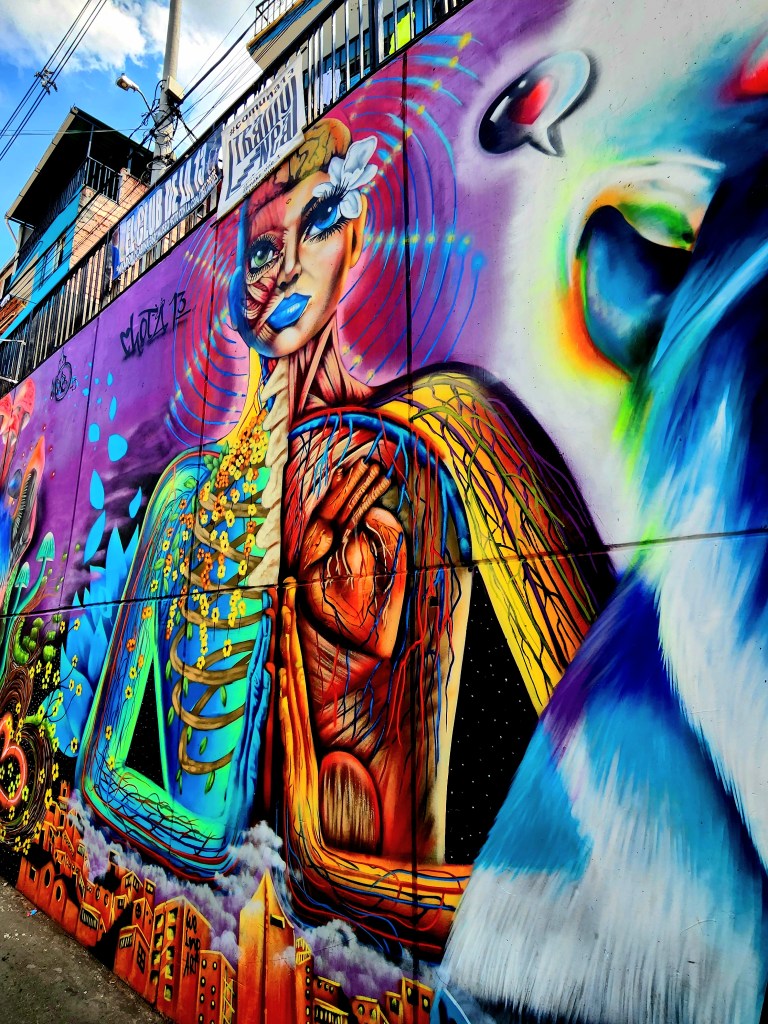
Some of the other projects were to build a new university in the same location that once housed the women’s prison and a community driven project to encourage street art and hip hop. The touristy area of Comuna 13 is filled with expressive murals and graffiti, retelling the tales of the community’s transformation. And there are multiple hip hop groups performing African rhythms and breakdancing, the former a reminder of the influence of the Afro-Colombian influence in the community. Commun 13 is largely comprised of people who were displaced from other areas near the coast and who came to Medellín in search of a calmer life. Many of the homes built were not legal, and many today still do not have official titles. I admire the resiliency of this community and their drive to build a better future for themselves.
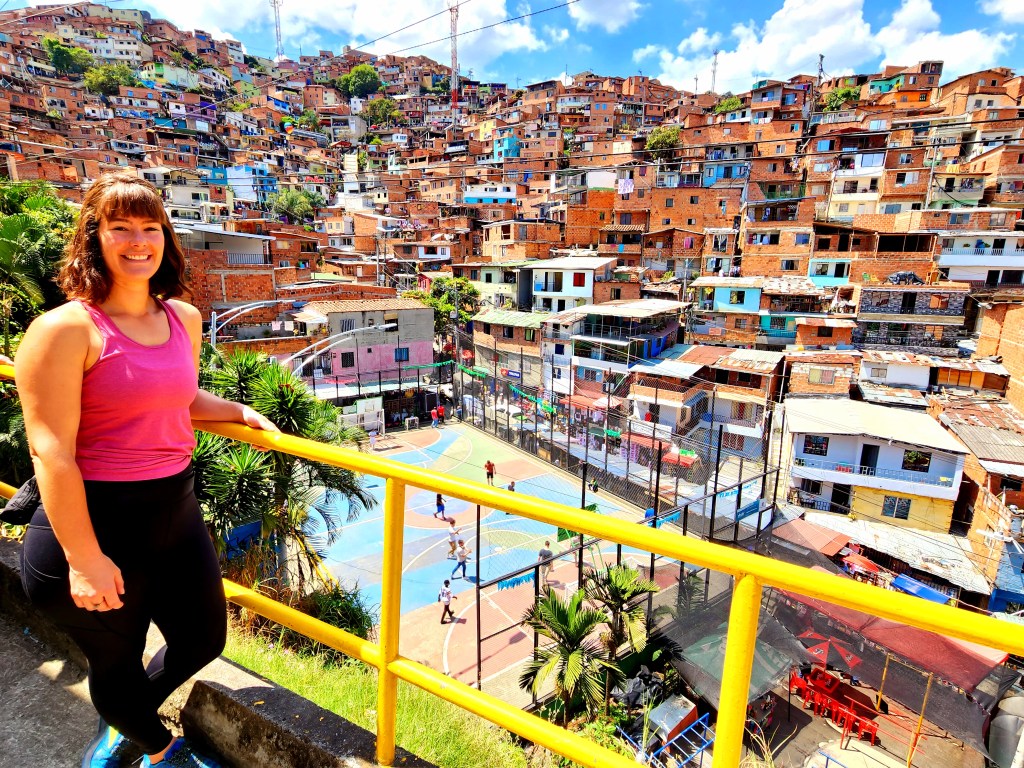
The community itself is a network of tiny staircases that connect the different levels of houses, and narrow streets where motorbikes pass through. There were a handful of cars, but honestly, there wasn’t much room for them. If we didn’t have our guide, Cristian, there is no way we’d be able to find our way around, hehe. The main road that leads straight towards the escalators was easy to find, but weaving in and out of the maze of passageways and narrow alleys was difficult at best.
As we walk around, I am just taking in the views of stacked homes and brightly colored murals. For me, it was a beautiful sight and an inspiring example of how a community can organize and improve their circumstances. We were told by Cristian that things aren’t 100%, and there is still a level of insecurity, but compared to 20 years ago, it’s eons better. A lot of the improvements are in part thanks to the government investments. I wonder how that could be applied to some of the communities FUNDAHMER (the NGO I volunteered for in El Salvador) works with. The community organization is excellent, and there are many projects funded by sister communities, but what appears to be lacking is government investment. I’d like to learn more about Comuna 13 and how it has evolved so much in just a short 20-year period.
We finish the tour in a rooftop cafe that serves a local specialty: hot chocolate with cheese! Haha, yes, you read that right; a bowl of hot chocolate and pieces of either mozzarella or “cuajada,” a wet fresh cheese floating in the chocolate. It seems like an odd combination, but I love chocolate, and I love cheese, so naturally, it must be a delicious treat?! It was better than anticipated, and I nearly drank (or should I say ate?) the whole thing! Hehe. I sipped some chocolate, and that forked out a bit of the cheese. I’m pretty sure Trader Joe’s sells, or sold at one point, a chocolate cheese….is this my new quest? To find chocolate cheese? Hehe.
While in the cafe, our guide was preparing a demonstration on graffiti. He showed us how to use the can of spray paint properly, and then gave us each a try. It was way more difficult than it looked, and I now have a whole new appreciation for graffiti artists. I thought I took his tips into consideration, but my “tag” just looked awful, lol. That was a very neat and unexpected part of the tour.
I could’ve stayed here all day, and there were questions I didn’t have answered, like beyond this touristy area of Comuna 13, how do the other residents feel about the escalator investments, and all the tourism that comes to just a small area? Is there any resentment? Do all the inhabitants of the larger Comuna 13 support the touristy area? I just might need to come back and explore some more :).
One thing our guide told us is that the minimum wage in Colombia is about 1.3 million pesos ($250/month) and an average rent for the lowest “stratus” (socio-economic class, if you will) is around 700,000 pesos. Rather than divide the population into lower, middle, and upper class, here in Colombia, it’s divided into strata: 1-7, with 1 being the lowest, with the majority of the inhabitants in Comuna 13 falling into status 1. We also learned that during a census, the government fills out a questionnaire that eventually categorizes you into one of the strata. Those in the higher strata pay more for public services, with the extra amount subsidizing those resources for the lower strata, and the lowest strata getting free access to things like health care. Cristian pointed out that this is a socialist system, but Medellín is a conservative city, and most wouldn’t accept this system as being socialist, and yet it exists. Another interesting little fact he shared with us was that in the glamorous expat neighborhood, El Poblado, the higher you go up the mountain, with the better views, the more money it costs. The exact opposite is true in Comuna 13, as the higher you go, the less accessible it is. This thought had never crossed my mind, but I suppose that would be true almost anywhere in the world. If you can pay for the nice view, and pay for a decent road to get there, it’s for the wealthy. If the location is remote and high up, with little to no access, even with a view to die for, it becomes a home for those with less money and resources.
Once the tour was over, we went back to the apartment for some food and a recharge. We wanted to head out and check out the neighborhood we were staying in, El Poblado. It’s one of the nicest places to stay in the city, and is where most of the expats live. There are a ton of restaurants, from Mexican to Vietnamese to American to typical Colombian. There are tons of bars and clubs, and we can easily imagine what it’s like on a Friday night. Too bad we’re in our 30s now and are usually done for the day before the sun sets, lol. One day we came back and were planning to head out and explore a bit, but needed up playing more Family Feud and Jeopardy on Dana’s iPad, lol, battling someone named Isabelle, who we assumed was a 7 year old sitting on her mom’s couch. Bring it on! Haha.
 Taking Off With Amelia